New Japanese martial aphorism embroideries

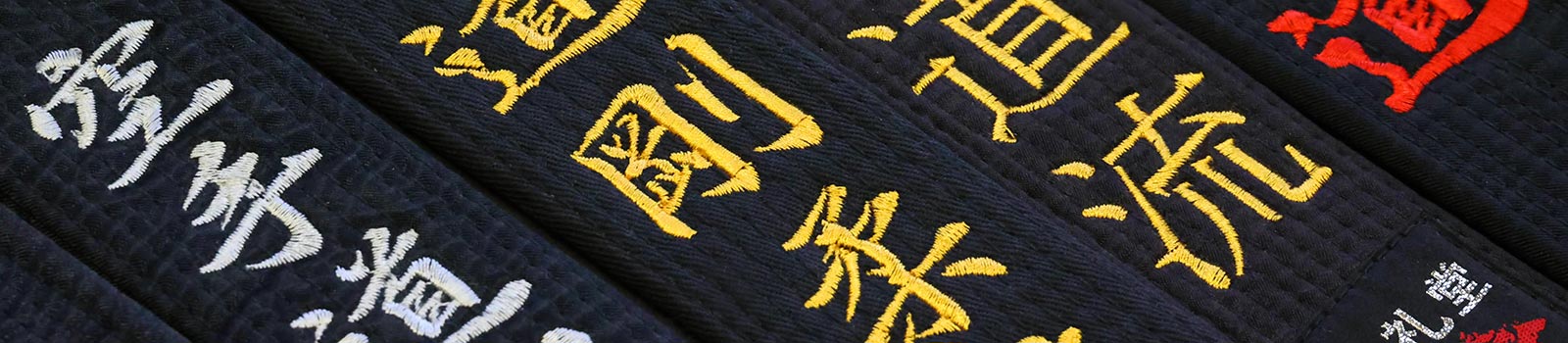
New embroidery options are now available, featuring a selection of Japanese martial aphorisms in kanji, designed to personalize your uniform or belt. Choosing one is simple: open the item you want to embroider, open the embroidery menu, and select “Japanese Martial Aphorisms.” You’ll find several options, each with its own story, so you can choose the one that best represents you.

We introduced this collection to offer a personalization that goes beyond the classic embroidery with name, rank, and discipline: a way to express an authentic martial message, in harmony with the values of the dojo. Below you’ll find a preview of the embroideries along with their meanings.

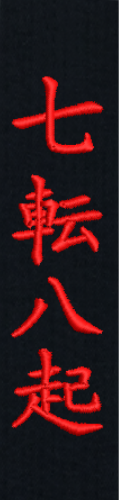
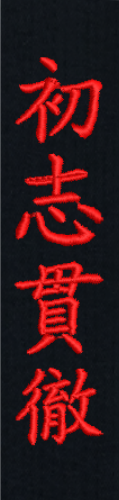
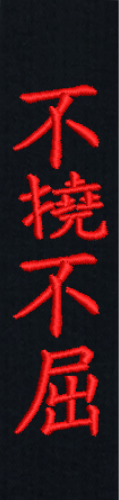
The example is stitched in red thread, but you can choose many other color options as well.

Would you like to know how to add embroidery to a belt or a uniform?
You can find all the details at this link.

A
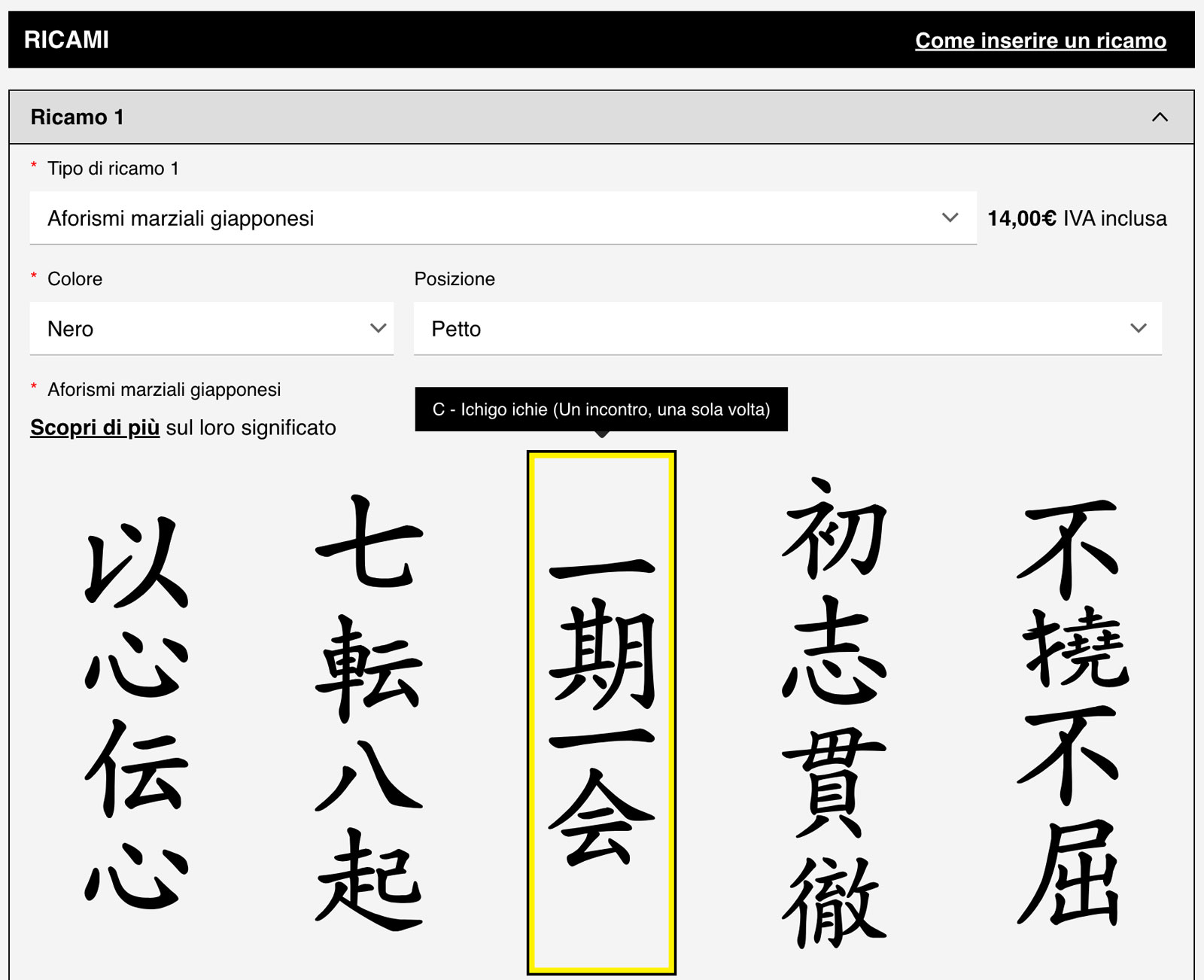
以心伝心 — Ishin denshin — “Heart to heart” or “Mind to mind”

“Ishin-denshin” refers to a deep, wordless communication—a direct transmission between individuals. In the context of martial arts, it is the capacity to sense an opponent’s intent through dedicated practice, receptivity and mindfulness. When technique and spirit harmonize, action flows naturally and intention is felt immediately.

B
七転八起 — Shichiten hakki — Fall seven times, stand up eight

“Shichiten hakki” expresses the resilience of those who persevere despite difficulties. In martial arts, it reminds us that value is measured by the continuity of practice, not by the absence of mistakes. The tatami becomes the place where discipline and determination are forged, day after day. For this reason, the saying is a symbol of perseverance: to learn, to correct oneself, and to return to a fighting stance with a steadier mind.

C
一期一会 — Ichigo ichie — One encounter, one chance (or: Once in a lifetime)

“Ichigo ichie” invites us to consider every encounter and every moment as unique and unrepeatable. The expression is rooted in the tradition of the tea ceremony, where every detail is cared for as if that meeting could never happen again. In the context of martial arts, it calls for an attitude of full awareness: every exchange on the tatami must be lived with earnestness, presence, and respect.

D
初志貫徹 — Shoshi kantetsu — Carry out the original intention to the end

“Shoshi kantetsu” expresses faithfulness to the intent with which a journey began. In practice, it means persevering with consistency, discipline, and patience, even when enthusiasm wavers. It is the quiet strength that sustains a martial arts practitioner’s path over the long term.

E
不撓不屈 — Futō fukutsu — Never give up, never back down

“Futo fukutsu” signifies an inner steadfastness that refuses to be broken by difficulties, maintaining integrity and firmness. In martial arts, it is the ability to remain clear-headed and composed even under pressure, without losing one’s direction. It is not blind stubbornness; it is continuity in practice and conduct, even in the most challenging moments.

F
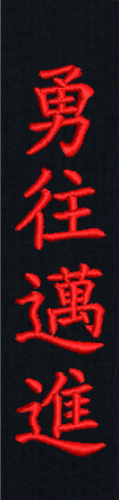
勇往邁進 — Yu’ō maishin — Press forward with courage and determination

“Yuō maishin” evokes the idea of steady advancement, guided by courage and sustained by resolve. In martial arts, it is the choice not to retreat in the face of difficulty, maintaining both direction and composure. It is not impulsiveness; it is a conscious commitment, step by step, toward a clear goal. It is the attitude of one who practices with intent, transforming every obstacle into progress.

G
一心不乱 — Isshin furan — Total concentration, without distraction

“Isshin furan” signifies a state of full awareness, where thought and action remain aligned. In martial arts, it means maintaining mental presence even under pressure, without being swept away by fear or hesitation. It is the quality that makes movement precise and judgment clear. It is cultivated through constant practice: breath, posture, and intent converge into a single point.

H
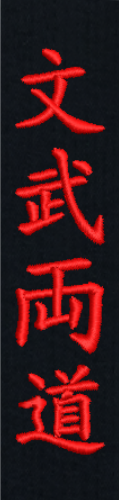
文武両道 — Bunbu ryōdō — Cultivating both mind and body

”Bunbu ryōdō” embodies the ideal of a complete practitioner: strength and technique paired with study and inner growth. In martial arts, it signifies the balance between physical training and the cultivation of the mind, character, and judgment. It serves as a reminder that progress is not just performance, but also a culture of respect, responsibility, and self-control. It is an invitation to walk two paths as one: refining the movement while simultaneously elevating the person.

I
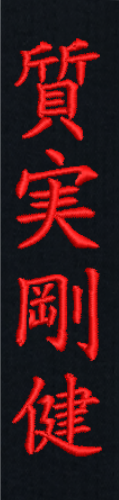
質実剛健 — Shitsujitsu gōken — Simplicity and fortitude

“Shitsujitsu gōken” describes an ideal of character: practicality, sincerity, and inner strength. In martial arts, it calls for an essential practice based on solid fundamentals and discipline, free from ostentation. It invites the practitioner to strive for the actual quality of movement and mental stability rather than appearance. It is a sober, reliable strength, built over time.

J
守破離 — Shuhari — Follow the rule, break the rule, transcend the rule

“Shuhari” describes the stages of growth in practice: first, learning the form with precision; then, understanding its principles and beginning to move beyond the pattern. Finally, one detaches from technique as a rigid form and makes it personal. It describes the stages of mastery: first assimilating tradition, then understanding its principles, and finally expressing them with freedom. It is an invitation to grow without shortcuts, respecting the path. Authentic creativity is born from solid foundations.

K
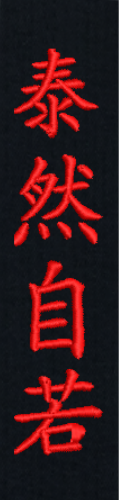
泰然自若 — Taizen jijaku — Imperturbable and composed in the face of difficulty

“Taizen jijaku” signifies the ability to remain calm and centered even in challenging situations. In a martial context, it means maintaining clarity, control, and presence even under stress. It is not passivity, but rather control and the conscious choice of the opportune moment. It is a sign of maturity in practice, where calmness becomes strength.

L
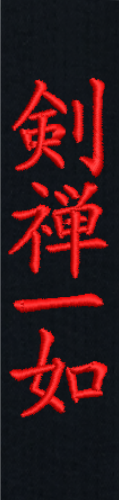
剣禅一如 — Kenzen ichinyo — Sword and Zen: as one

“Kenzen ichinyo” is a widely used saying in Budo, indicating that martial practice and inner cultivation are not separate. Technique requires the same mind as Zen: presence, calmness, and full awareness. By rigorously training movement, one also trains the mental state that makes it effective and correct. The martial way and the spiritual way converge into a single discipline.

M
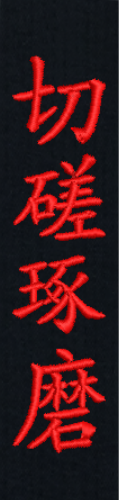
切磋琢磨 — Sessatakuma — Carving and polishing a gemstone

“Sessatakuma” evokes the idea of self-improvement. It is the image of a precious stone being polished, symbolizing growth through discipline and challenge. In the dojo, Sessatakuma refers to practice that elevates and refines both technique and spirit.

N
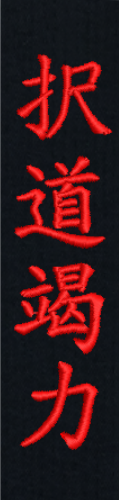
択道竭力 — Takudō ketsuryoku — Choosing the Path and dedicating all one’s strength to it

“Takudō ketsuryoku” evokes the idea of a clear choice: identifying one’s path and sustaining it with total commitment. In a martial context, it means training with continuity and responsibility, without distraction or shortcuts. Determination is not a peak of enthusiasm, but a daily constancy: presence, discipline, and care for fundamentals. It is an invitation to transform the initial choice into concrete practice, until it becomes part of one’s character.

O
平常心 — Heijōshin — A calm, steady mind

“Heijoshin” refers to a simple, steady state of mind: not elated by victory and not crushed by adversity. In martial arts, it means staying centered, composed, and ready, without euphoria or frustration. It is a fundamental quality for a practitioner’s consistency and maturity.

P
心技体 — Shin gi tai — Spirit, Technique, Body

“Shin gi tai” expresses the unity of the three pillars of the discipline. Technique is supported by the body, but it finds its direction in the spirit: motivation, ethics, and presence. Authentic growth happens when these aspects advance together.

Q
不動心 — Fudōshin — Unshakeable spirit / Immovable mind

“Fudōshin” signifies the ability to remain centered even under pressure, without being swept away by fear, anger, or hesitation. In martial arts, it is inner stability: seeing with clarity and maintaining control over every movement. It is not rigidity; it is an active calmness, ready to respond with lucidity. It is built through constant practice, until the mind becomes stable in the face of conflict.

R
克己心 — Kokkishin — Spirit of self-mastery

“Kokkishin” signifies the ability to master one’s impulses and reactions, choosing the correct conduct even under pressure. In martial arts, it means training oneself above all, through patience, restraint, respect, and consistency. It is the inner strength that prevents seeking shortcuts, accepts fatigue, and allows for self-correction. In essence, true victory is the victory over one’s own ego and weaknesses.

S
残心 — Zanshin — The spirit that remains / Lingering awareness

“Zanshin” is the attention that does not fade when the technique ends. Even after the action, one remains fully present. It is a sober, composed presence, without haste or distraction: the movement concludes, but the spirit remains.

T
無心 — Mushin — No-mind (free of deliberate thought and free of attachment)

“Mushin” is a state in which action occurs without internal dialogue or hesitation: one is not blocked by fear, overthinking, judgment, anger, or expectations. The mind is clear and reactive, yet it clings to nothing. It is not emptiness in the sense of unconsciousness or blind automation. Rather, it is uncontracted lucidity: everything is perceived, but without the thoughts that obstruct action.

Support

Do you have any questions? Our team is here to help.

"*" indicates required fields

This field is for validation purposes and should be left unchanged.
Nome e cognome*
Privacy Policy*
Read the Privacy policy.
Shopping Cart