
Tabella dei Contenuti
Choose the best size by using your current uniform as a reference
To choose the right size for a judogi or karategi, the most reliable method is to start with a uniform you already own and know well. This way, you do not have to rely only on the size shown on the label or on the wearer’s height; instead, you can compare the actual measurements of the uniform you normally use with those listed in the product size chart. On our website, every item has its own specific size chart.
This system helps you choose more accurately, especially if you need a better idea of how the garment will fit.
Below you will find a short guide explaining how to make this check.
The guide refers to a judogi, but exactly the same procedure can also be applied to karategi.
1. Wear the uniform you currently use
The first step is to put on your current judogi or karategi and carefully observe how it fits. Consider whether you are satisfied with the garment as it is or whether you would prefer some changes, for example to the sleeve length, jacket length, trouser length or jacket width. The aim of this first stage is to understand what the ideal fit is for you.
Then write down on a sheet of paper any changes you feel are needed. For example, if the sleeves should be a little longer, note by how many centimetres. If you would prefer the jacket or trousers to be longer or shorter, make a note of that as well. Also consider the width of the jacket.
2. Create your ideal size chart
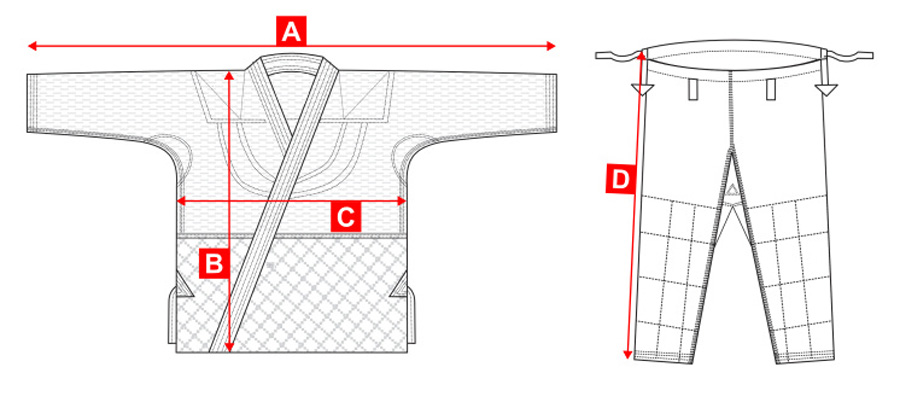
In the product size chart on our website, you will normally find the main garment measurements, indicated by the letters A, B, C and D.
These measurements correspond to:
A = total sleeve length, measured from cuff to cuff
B = jacket length
C = jacket width
D = trouser length
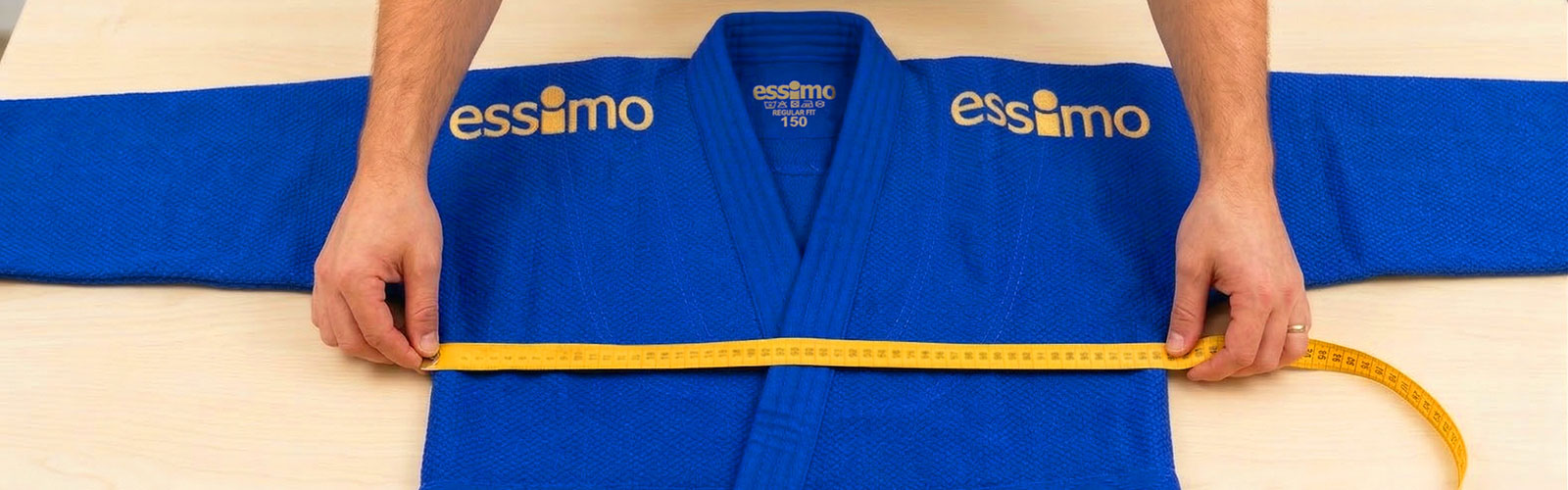
To compare the measurements correctly, it is also important to know how they should be taken. The measurements must be taken with:
– the jacket laid flat on a flat surface
– the trousers laid flat on a flat surface
This is important because only in this way can the comparison with the size chart be reliable.
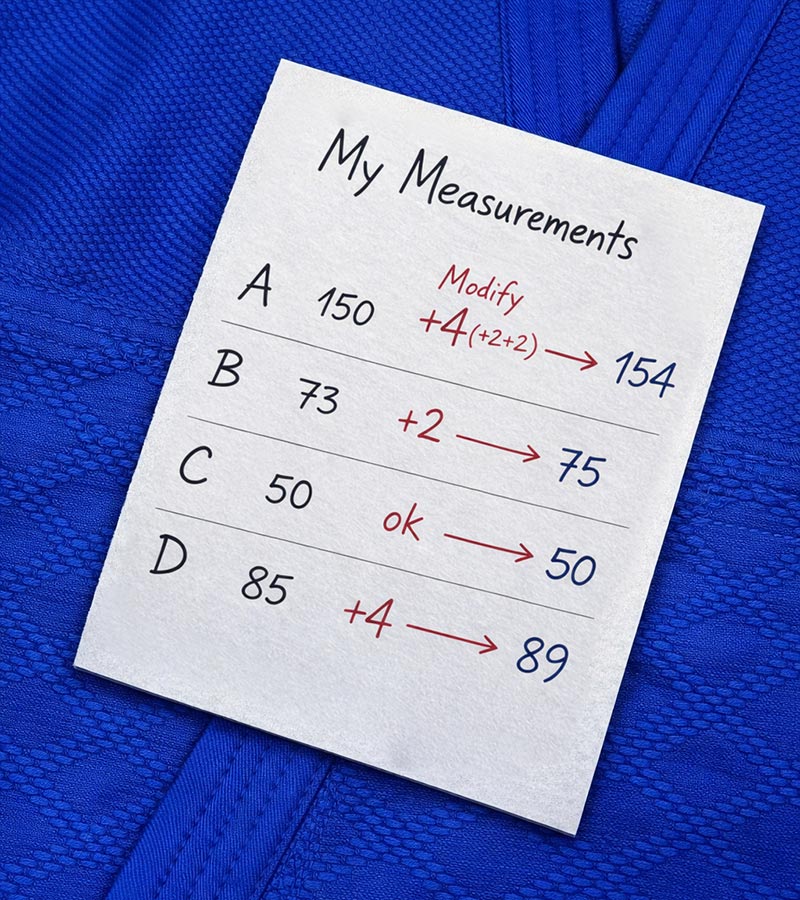
To choose the ideal size, take your current judogi or karategi and measure it to obtain measurements A, B, C and D.
If your current garment already fits you well, these measurements are an excellent reference. If, on the other hand, you would prefer a different fit, you can use them as a basis to adjust the measurements and find the size that is ideal for you: simply add or subtract a few centimetres according to the fitting considerations you made in step 1. See the example below.
Sleeve Length (Measurement A)
– If you want to lengthen each sleeve by 2 cm, add 4 cm to the overall measurement.
– If you want to shorten each sleeve by 1 cm, subtract 2 cm from the overall measurement.
Jacket Length (Measurement B)
– For a longer jacket, add the required number of centimetres to the measured length.
– For a shorter jacket, subtract the corresponding number of centimetres from the measured length.
Jacket Width (Measurement C)
– For a wider jacket, add the required number of centimetres to the measured width.
– For a narrower jacket, subtract the required number of centimetres from the measured width.
Trouser Length (Measurement D)
For longer or shorter trousers, add or subtract the required number of centimetres from the measured length.
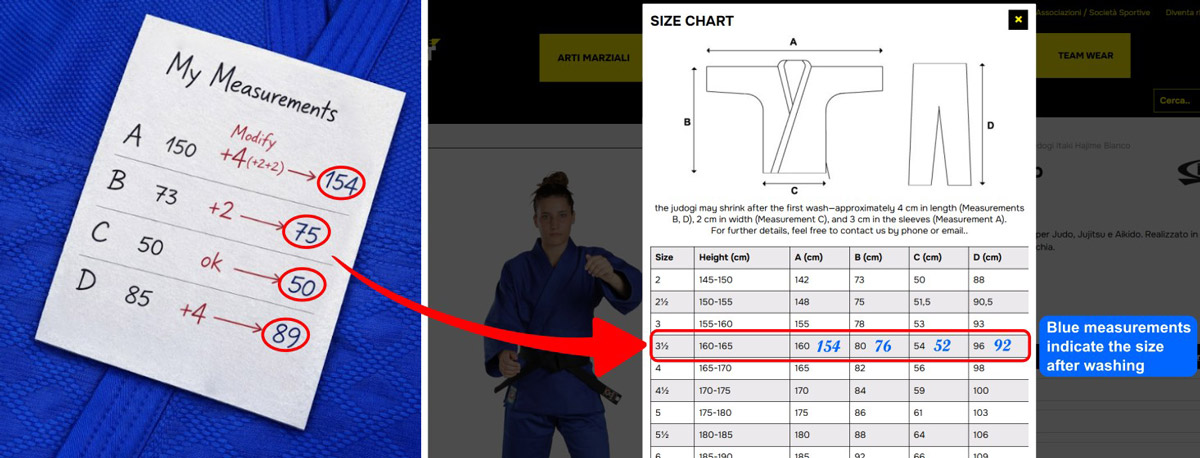
3. Compare your ideal measurements with the product size chart
4. Consider possible shrinkage after washing
When comparing the measurements in centimetres of the karategi or judogi shown in the size charts on our website, remember that any shrinkage after the first wash only needs to be taken into account for garments that contain cotton.
For example, a 100% polyester karategi does not shrink, whereas garments containing cotton shrinks, and this should be considered when comparing measurements. This aspect is always indicated in the size chart of each product, so that you can assess the correct size also according to the fabric composition.
The following image shows that, based on the comparison, size 3½ is the best choice, as it is the closest to the ideal measurements.
In summary
To choose the most suitable size, the best method is to start with a uniform you already use:
1) consider how you would like it to fit
2) measure it carefully while laid flat
3) adjust the measurements according to the fit you want
4) compare the resulting measurements with the product size chart to identify the most suitable size. Remember that if the garment is made of cotton, it may shrink after washing. This information is always clearly indicated in the product size chart.
Support
"*" indicates required fields


